
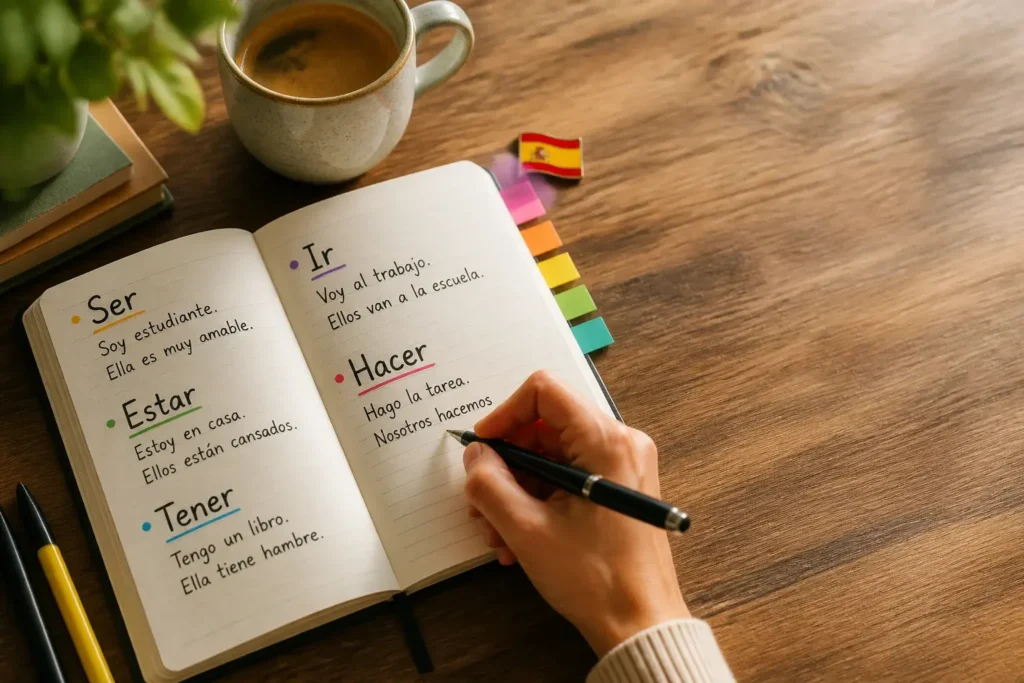
Want to go from “Hola” to actual conversations without sweating every grammar rule? These five powerhouse verbs unlock hundreds of sentences right away. Learn them well and you’ll sound way more fluent, way faster. Ready to stop memorizing random vocab and start saying what you actually mean?
1. Ser: Your Go-To For Identity, Traits, And Time
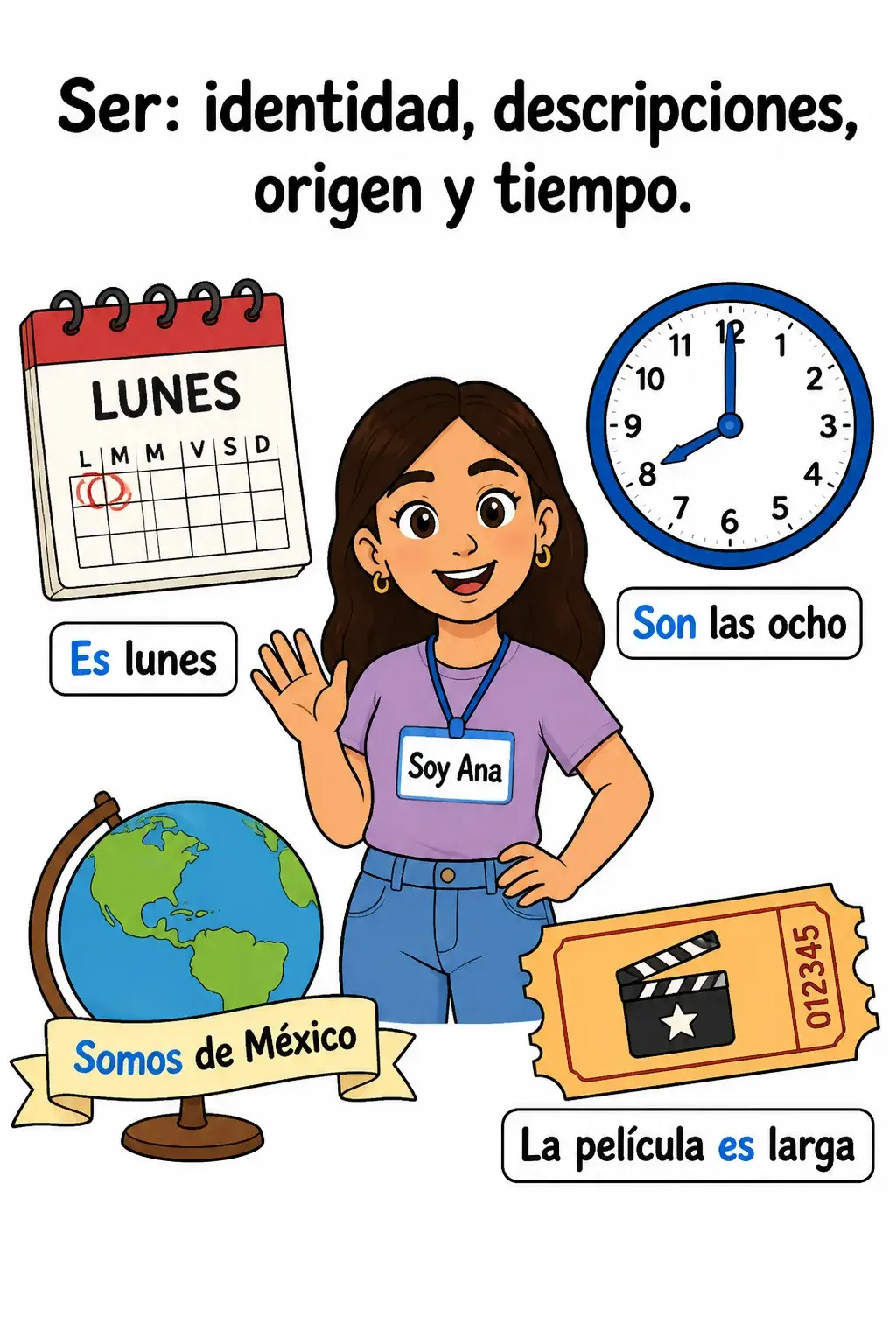
Ser gives you the backbone of who or what something is. You’ll use it for identity, descriptions, origin, professions, and time. If it feels permanent or defines the thing, ser is your verb.
Use It When You’re Defining Stuff
- Identity/Profession: Soy Ana. Ella es médica. (I’m Ana. She’s a doctor.)
- Origin/Nationality: Somos de México. (We’re from Mexico.)
- Descriptions: La película es larga. (The movie is long.)
- Time/Date: Es lunes. Son las ocho. (It’s Monday. It’s eight o’clock.)
Mini Conjugation (Present)
- yo soy | tú eres | él/ella/usted es | nosotros somos | ellos/ustedes son
Pro tip: Use ser for inherent qualities: “El café es caliente por naturaleza” doesn’t work—use temperature with estar (we’ll get there). But “El café es colombiano” works great. This verb anchors introductions, bios, and “about me” vibes.
Benefit: Nail ser and you can instantly introduce yourself, describe people, and read schedules without panic.
2. Estar: Feelings, Locations, And Temporary States
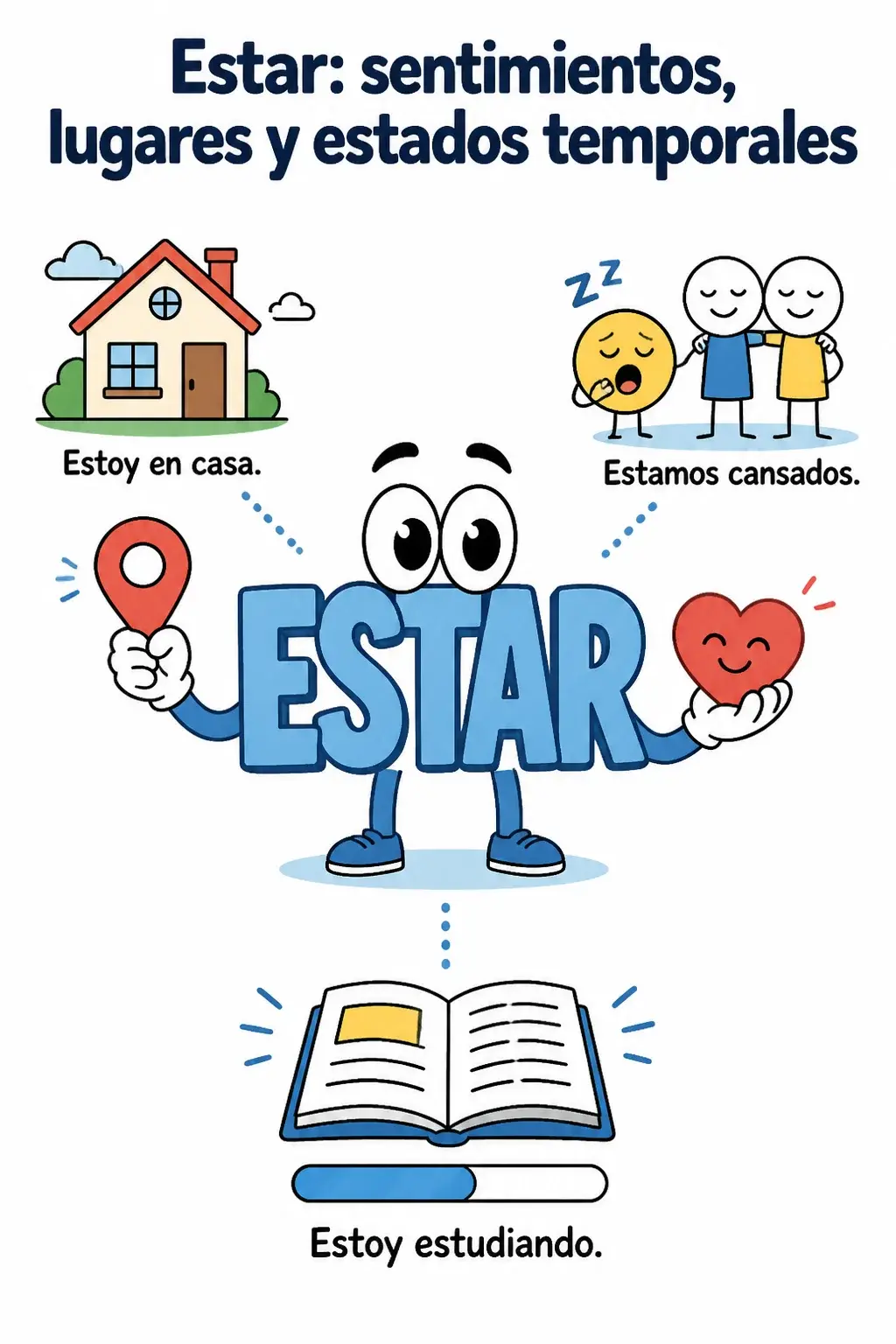
Estar tells you where something is and how it feels right now. Think changeable states, positions, and emotions. If it can flip by tomorrow (or in five minutes), estar’s your friend.
Use It For “Right Now” Reality
- Location: Estoy en casa. ¿Dónde estás? (I’m home. Where are you?)
- Feelings/Conditions: Estamos cansados. El café está frío. (We’re tired. The coffee is cold.)
- Ongoing Actions (with gerunds): Estoy estudiando. (I’m studying.)
Mini Conjugation (Present)
- yo estoy | tú estás | él/ella/usted está | nosotros estamos | ellos/ustedes están
Key contrast: Ser aburrido = to be a boring person. Estar aburrido = to feel bored. Huge difference, right? FYI, location always uses estar, even for permanent places: “Madrid está en España.”
Benefit: You’ll talk about where you are, how you feel, and what you’re doing—aka real life.
3. Tener: Ownership, Age, Needs, And Idioms Galore
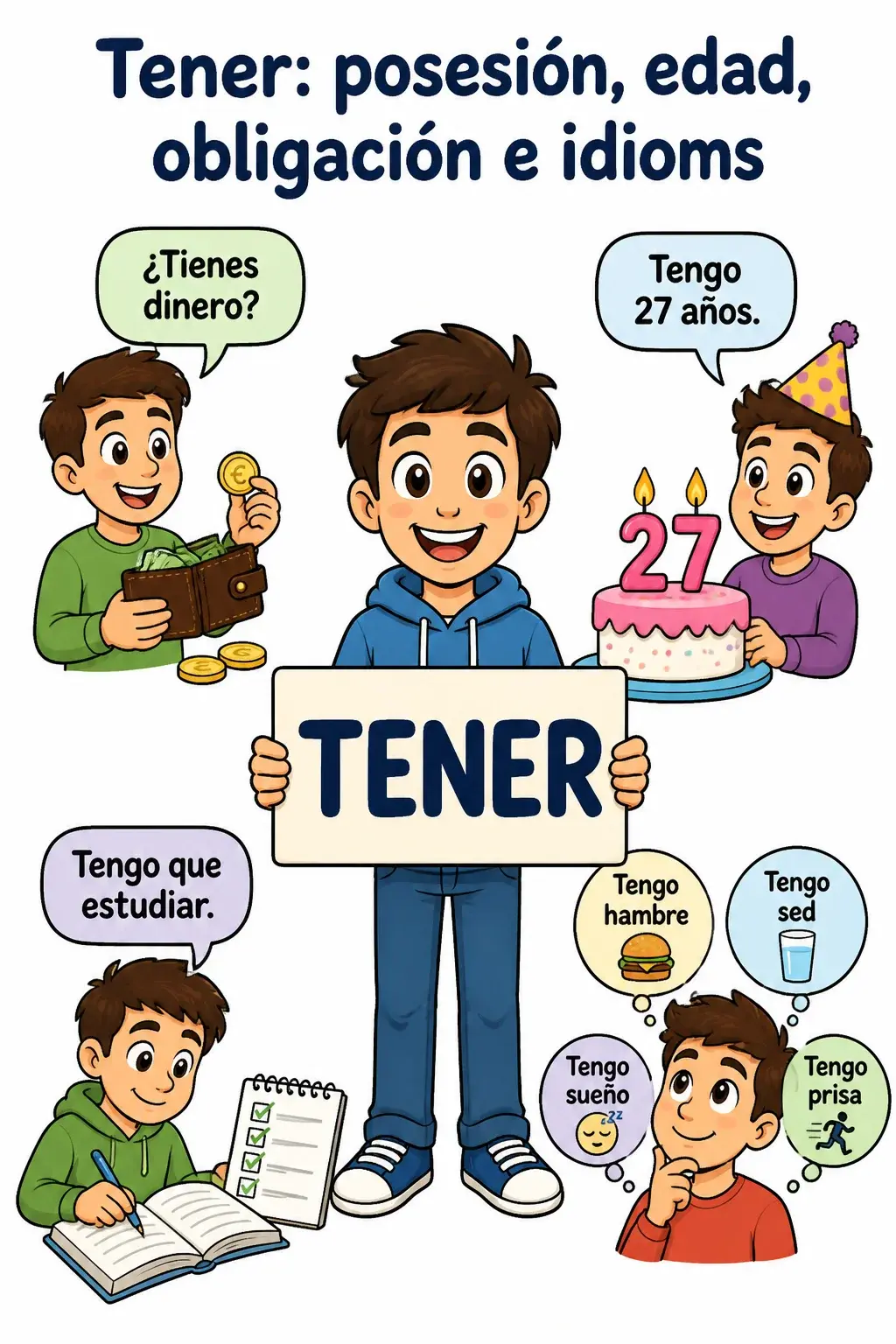
Tener literally means “to have,” but it does way more heavy lifting. You’ll use it for possessions, age, obligations, and tons of handy expressions. It’s practical and all over everyday speech.
Everyday Power Uses
- Possession: Tengo tiempo. ¿Tienes dinero? (I have time. Do you have money?)
- Age: Tengo 27 años. (I’m 27 years old.)
- Obligation (tener que + inf.): Tengo que estudiar. (I have to study.)
- Idioms: Tengo hambre/sed/sueño/prisa. (I’m hungry/thirsty/sleepy/in a hurry.)
Mini Conjugation (Present)
- yo tengo | tú tienes | él/ella/usted tiene | nosotros tenemos | ellos/ustedes tienen
Pro tip: Spanish uses tener for states English uses “to be.” So you don’t “are hungry”—you have hunger. Sounds dramatic? Maybe. Feels natural after a week, promise.
Benefit: You’ll cover tons of daily needs quickly—aka you won’t starve or miss your bus.
4. Ir: Movement, Plans, And The “Gonna” Hack
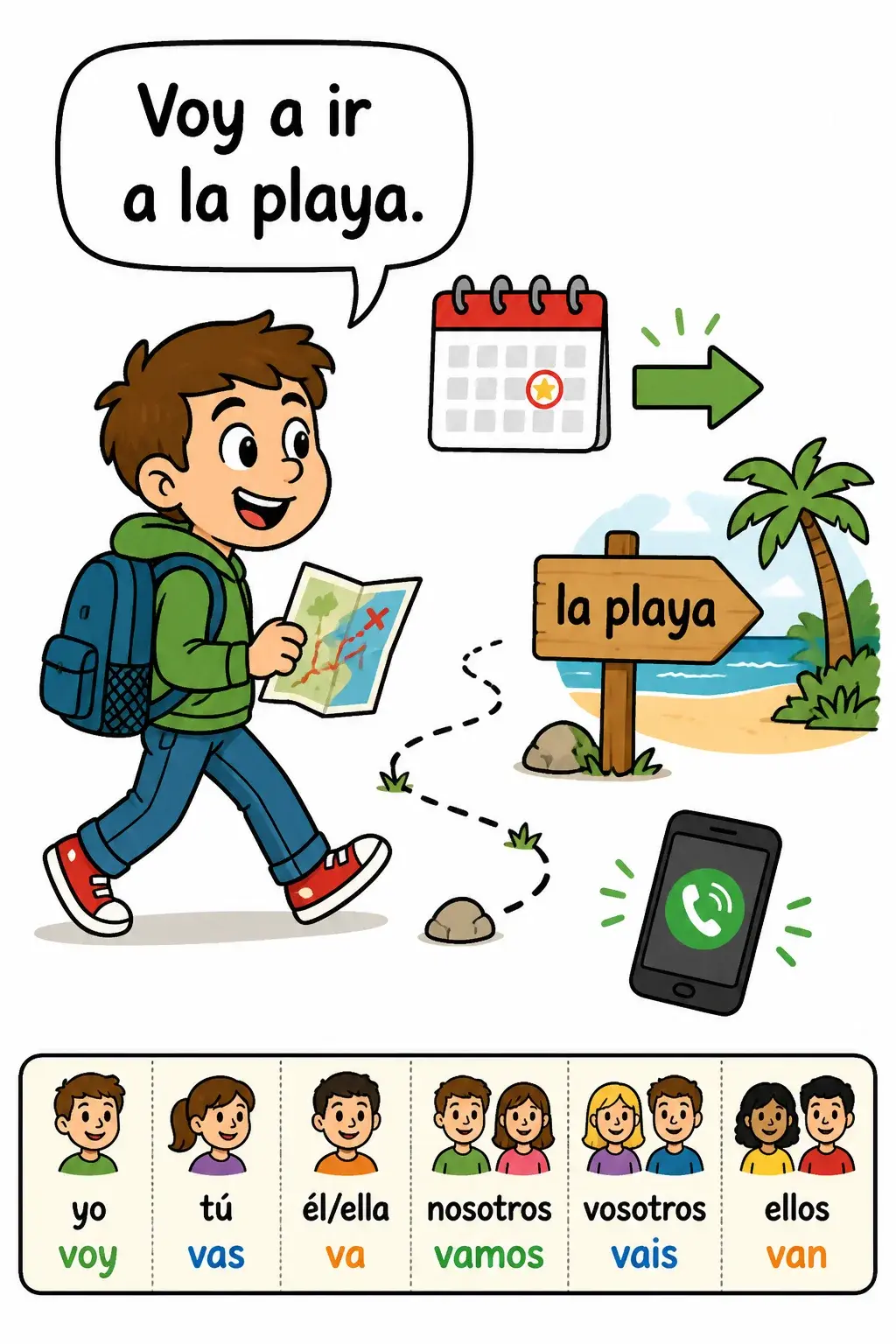
Ir powers where you go and what you’re about to do. Master it and you unlock easy future talk with “going to.” It’s one of those verbs you’ll use ten times a day without noticing.
Use It To Move And Plan
- Movement (ir + a + place): Voy al trabajo. Vamos a la playa. (I’m going to work. We’re going to the beach.)
- Near Future (ir a + infinitive): Voy a llamar. ¿Vas a venir? (I’m going to call. Are you going to come?)
- Invites/Plans: ¿Vamos? (Shall we go?)
Mini Conjugation (Present)
- yo voy | tú vas | él/ella/usted va | nosotros vamos | ellos/ustedes van
Travel hack: “¿Cómo vas?” asks “How are you getting there?” (transport), not “How are you?” Don’t worry—context saves you. And IMO, “voy a + infinitive” feels like Spanish’s cheat code to talk about the future without memorizing future tense endings.
Benefit: You’ll plan hangouts, sketch your day, and sound spontaneous without grammar headaches.
5. Gustar: Likes, Loves, And The Backward Brain-Twister
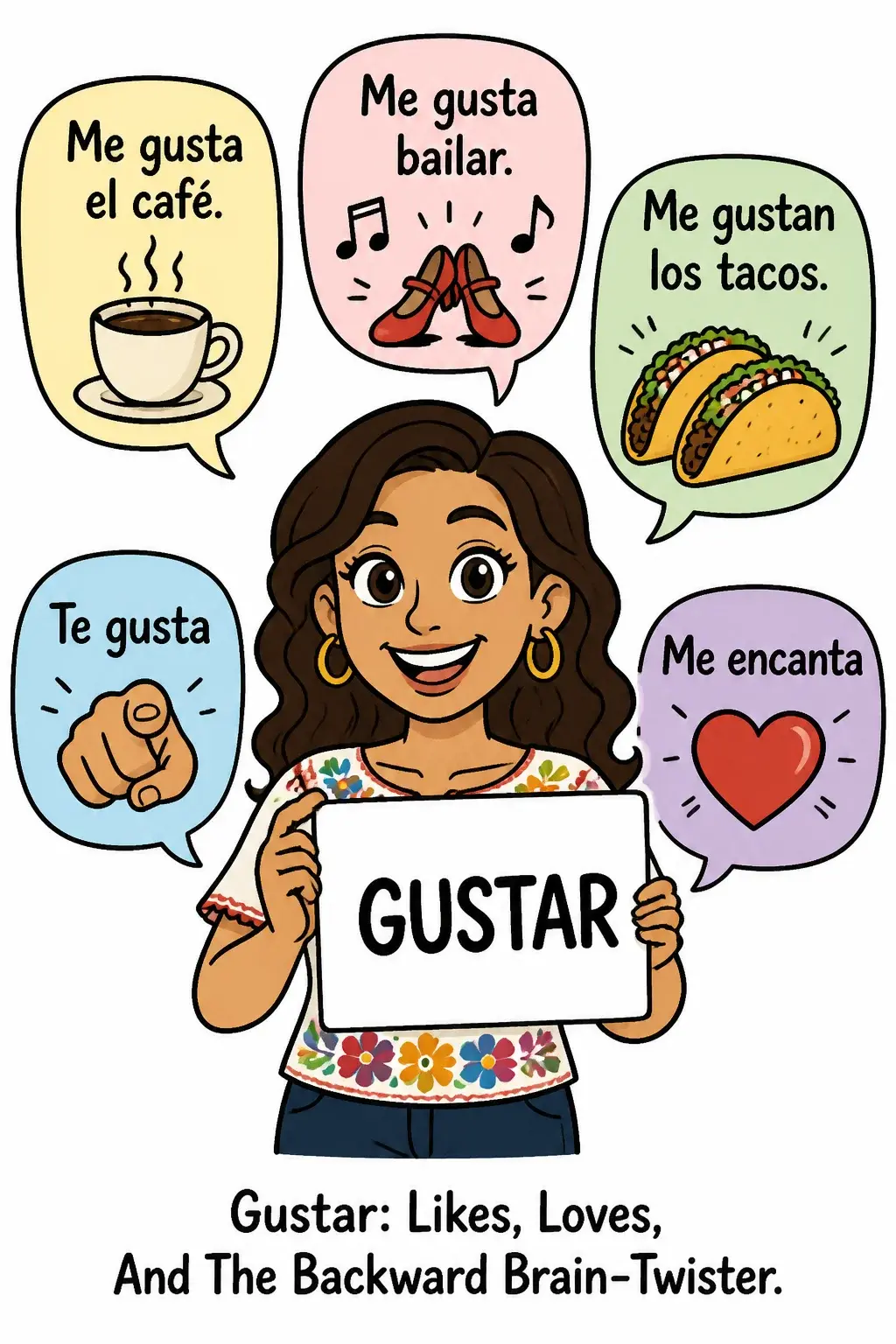
Gustar looks weird at first because the thing liked is the subject. But once it clicks, you’ll express tastes like a pro. Want to bond over music or food? This is your ticket.
How It Works (Spoiler: Not Like English)
- Me gusta + singular verb/noun: Me gusta el café. Me gusta bailar. (I like coffee. I like to dance.)
- Me gustan + plural noun: Me gustan los tacos. (I like tacos.)
- Change the pronoun: Te gusta, le gusta, nos gusta, les gusta
Turn Up Or Tone Down
- Me encanta = I love (it). Me fascina = I’m obsessed. Me molesta = It annoys me.
- Add emphasis: A mí me gusta, A ella le gusta…
- Negatives: No me gusta el té. (I don’t like tea.)
Structure hint: Think “To me, it pleases.” So “Me gustan los perros” literally means “Dogs are pleasing to me.” Sounds fancy, works beautifully. And seriously, sprinkle in encantar for instant personality.
Benefit: You’ll chat about tastes, plan dinners, and survive small talk without awkward shrugs.
Quick Practice Mini-Drills
- Ser vs. Estar: ¿Cómo ______ hoy? Estoy feliz, pero mi jefe es exigente.
- Tener: No tengo tiempo ahora, pero tengo ganas de salir mañana.
- Ir: Vamos a ver una peli. ¿Vas a venir?
- Gustar: A mí me gustan los domingos tranquilos. ¿Y a ti?
Pronunciation Nudge
- Ser and serio start with a crisp “seh.”
- Roll that single r in pero lightly; double rr in words like perro trills more.
- Gustar has a clean “goo” like “goose,” not “gust.”
Mix-And-Match Sentence Starters
- Soy estudiante, pero estoy cansado hoy.
- Tengo que trabajar, pero voy a descansar luego.
- Me gusta el café, pero me encantan los capuchinos.
Wrap-up time: with ser, estar, tener, ir, and gustar, you can introduce yourself, set plans, express needs, and talk about what you love. Start dropping these into quick daily phrases, and your confidence will skyrocket. Keep it simple, stay curious, and go try them out with a real human—language loves company.